

How to Drive Safely on Leaf-Covered Roads
- PEAK Squad
- PEAK
- October 2, 2026
Leaf-covered roads hide potholes and cause skids. Get five fall driving safety tips that help you slow down, steer smoothly, and stop in time. Read more.
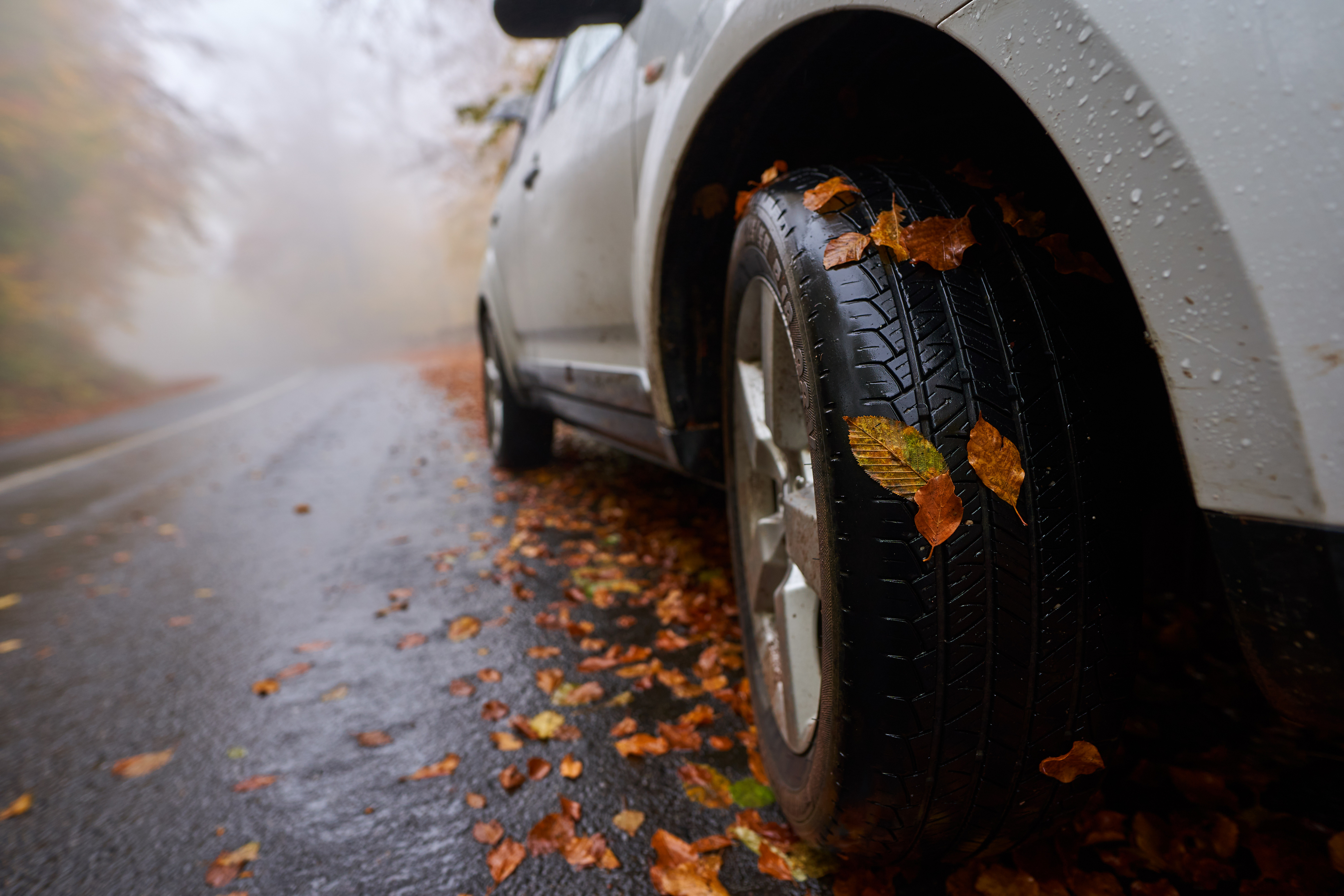
To drive safely on leaf-covered roads, treat leaves the same way you would treat ice: reduce your speed, increase your stopping distance, and avoid braking hard or suddenly changing directions. Autumn is a beautiful season, but fall driving can involve road hazards that motorists often underestimate.
The National Highway Safety Administration (NHSA), a state-approved provider of driver education programs, has specifically reported on the effects leaves can have on stopping distance. According to the NHSA, a vehicle traveling at 45 mph on a dry road will need about 80 feet to stop. If the road is wet and covered in leaves, that stopping distance jumps to 200 feet — more than double the usual distance. If you're not prepared, that kind of unexpected change can lead to danger.
To reduce your risk, follow these fall driving safety tips if you come upon a leaf-covered roadway:
- Slow down before you reach the leaves
- Don't assume the underlying road surface is clear
- Increase your following distance
- Be extra careful when leaves are wet
- Take curves slowly
We'll also discuss the importance of keeping your windshield clean and clear — and how to do it.
Slow Down Before You Reach the Leaves
As with most other driving hazards, reducing speed should be your go-to first move when you encounter a leafy road surface:
- The slower you're going, the more time you'll have to react. You'll also buy yourself critical seconds to spot other dangers that may be lurking below the leaves, like a pothole you wouldn't have noticed if you were flying along at full speed.
- Slowing down will also reduce the force of any impact that may occur if you do end up skidding or crashing. Scientific studies show that speed has an exponential impact on crash force. For example, if you cut your speed in half, you reduce crash impact to just a quarter of what it would have been at the higher speed.
- You'll also preserve your tire traction. That's exactly what your tires need when you're trying to steer and brake at the same time.
The "brake before, coast through" driving rule is your friend here. If you see leaves covering the road ahead, slow down on clear pavement before you reach them. Then, coast through the leafiest sections. Don't hit the gas or slam the brakes while you're on top of the leaves. Just glide over, then safely return to your normal speed once the road surface clears up.
Don't Assume The Underlying Road Surface is Clear
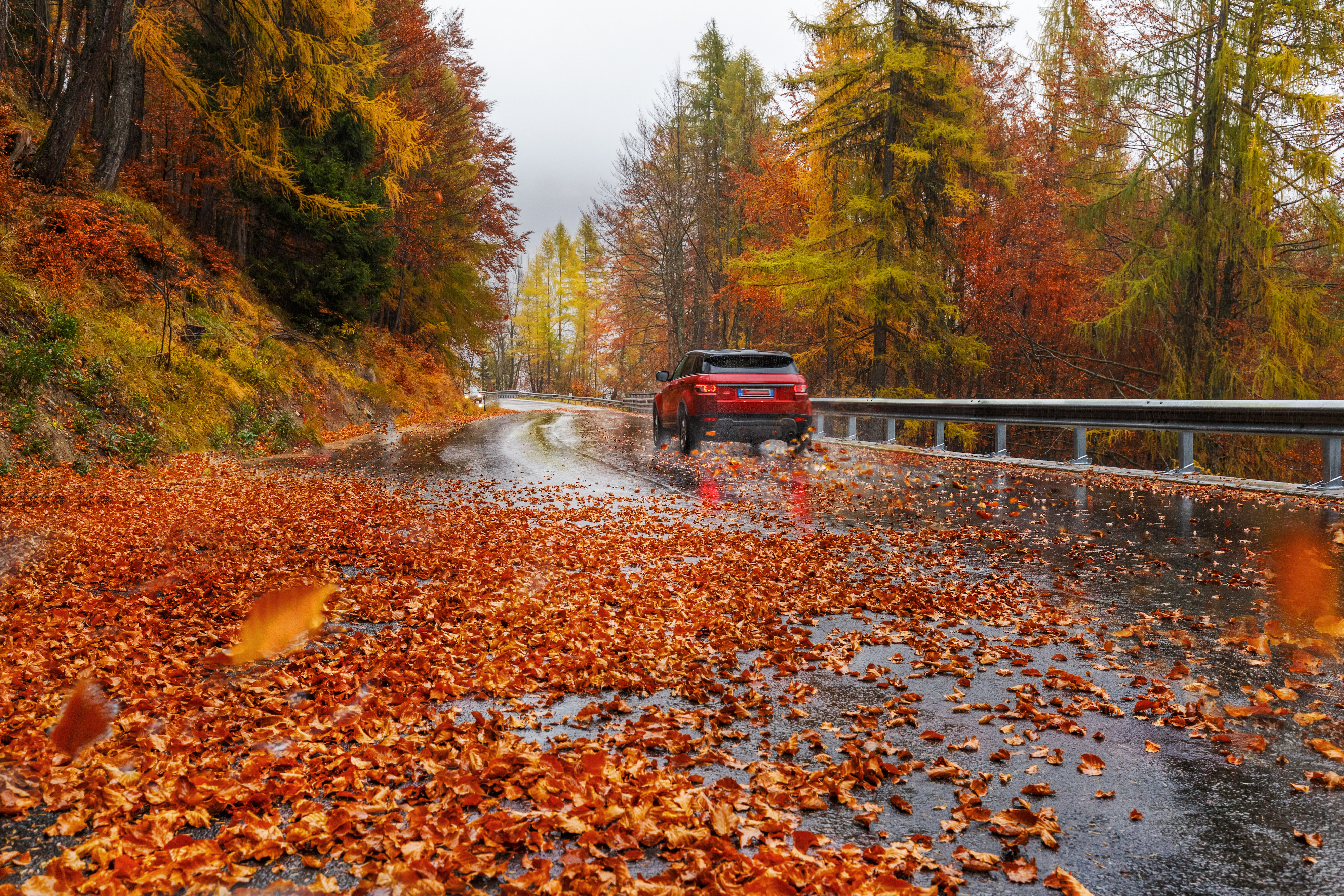
That beautiful blanket of colorful leaves may look harmless, but there could be dangers lurking underneath. These could include:
- Potholes
- Jagged ruts
- Raised curbs
- Road debris
Leaves can also cover pavement markings that convey important information you need to safely navigate the road.
Given these hazards, it's wise to treat leaf-covered stretches of road as an asphalt-covered mystery box. Assume the worst: Maintain a steady but reduced speed, keep both hands on the wheel, follow the tracks made by other passing vehicles, and be ready for the unexpected.
Increase Your Following Distance
It's impossible to know what the car ahead of you will do, especially when you can't see what's actually under the leaves. If you're headed into a leaf-covered patch on a busy road, extend your following distance so you have at least five seconds to react.
By increasing your following distance, you can:
- Maintain a better view of the road surface
- Allow the car ahead to clear a safer path for you
- Buy critical reaction time
If something goes wrong, those extra few sections can mean the difference between being in a crash and avoiding one.
Be Extra Careful When Leaves Are Wet
Leaves pose extra dangers when they're wet, as they create a risk of hydroplaning.
What is hydroplaning, exactly? It's when your tires actually lose contact with the road because a layer of water has formed a wedge that physically lifts your car off the paved surface. Hydroplaning is extremely dangerous because you can't properly control a car that's riding on water instead of a road.
Wet leaves can cause hydroplaning at lower speeds than regular pavement. Knowing how to handle them is a handy driving skill that many motorists simply overlook.
Here's how to avoid hydroplaning on wet leaves:
- Slow down — especially if you're taking a curve on a leaf-covered road
- Increase your following distance
- Do not brake hard or make any sudden maneuvers
- If you need to brake or adjust your direction, do it smoothly and gradually
- Drive directly in the tracks created by other passing vehicles
It's also a smart move to take care of your fall car maintenance before the leaves start dropping in large numbers. Our seasonal car care guide also explains how to check your tread depth, which you absolutely should do as the weather changes.
If you do start hydroplaning on wet leaves despite your best efforts, here's what to do:
- Do not slam on your brakes, as this could cause you to lose whatever steering control you still have
- Ease off the gas
- Steer into the direction of the skid
- Keep your eyes on your intended path
- Avoid making sudden steering adjustments
When traction returns, guide your car in the direction you want to go. Then, take a deep breath.

Take Curves Slowly
When you're rounding a curve, you're relying on your tires to maintain their traction. This can be a challenge on leafy roads — especially when wet leaves are involved.
If the leaf-covered patch you're on extends around a curve or corner, here's what you can do to stay safe:
- Reduce your speed while the road is straight, before you enter the curve. When roads are leafy, slow down more than you normally would.
- Maintain your reduced, controlled speed as you take the curve.
- Keep your steering movements smooth.
- Avoid accelerating or braking sharply.
- Be prepared to react to oncoming traffic, as the center line on the road may not be visible.
These tips are especially important if you're heading out on a fall foliage road trip. Roads with the prettiest views often follow winding paths, and that pushes up your chances of encountering sharp, leaf-covered curves.
Keep Your Windshield Clean And Clear
As a final tip: Protect your visibility. Before you hit the road, remove leaves and debris from your car's intake vents. Those are the vents at the base of your windshield, where your defogger/defroster's airflow sits. They need to be clear for your fog and frost controls to work properly.
Also, make sure your windshield wash reservoir is full, and that you've got an extra jug of washer fluid in the trunk. For fall, you might want a product that cuts straight through leaf sap, organic film, and plant debris. PEAK's Bug Cleaner windshield wash is specially formulated to do just that. As winter approaches, you can switch to PEAK's De-Icer washer fluid with anti-frost technology for maximum visibility in wilder weather.