
What You'll Learn in Your First Year as an Auto Tech Student
- PEAK Squad
- PEAK
- October 9, 2026
See which auto mechanic courses fill your first year of school, including automotive systems, shop safety, diagnostics, lab work & general electives.
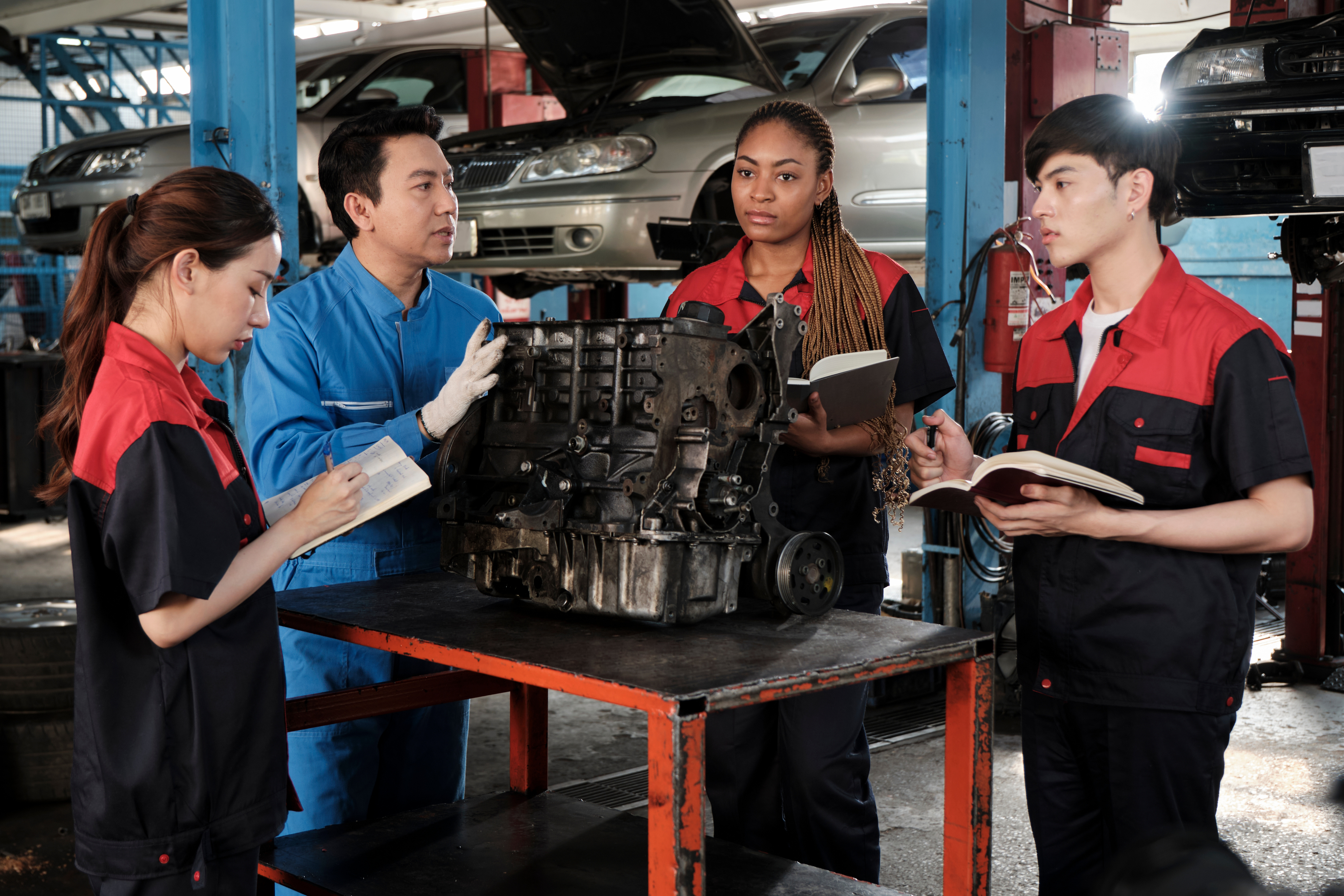
Auto mechanic schools usually start with fundamentals before moving on to more technical and challenging concepts. That said, every program differs. The exact sequence of courses you'll follow in your first year depends on factors like program length, whether you're in a general or specialized track, and whether your program leads to a diploma or a degree.
Schools always provide students with structured academic plans that explain a program's complete course sequence. Your program's purpose-built plan is the best source of specific information about what you'll learn when you start automotive trade school.
It can also help to zoom out and consider what auto tech programs usually emphasize in year one. Most schools cover:
- Foundational knowledge of automotive systems
- Fundamental diagnostic and repair procedures
- Hands-on skills development
- General education electives that build transferable skills
By understanding the unique purpose each learning branch serves, you'll be better prepared to hit the ground running on day one. It can also help to look ahead to later years to see how your first year will support your continued learning.
Foundational Knowledge of Automotive Systems
Many people who sign up for auto mechanic courses already know their way around a car pretty well. However, schools usually start by building a common foundation for all students, regardless of how much (or little) automotive knowledge they have when they first walk through the door.
From the school's perspective, this approach serves an important educational purpose. It ensures that students who enter the program as auto tech newbies have the opportunity to build the baseline knowledge everyone needs to advance through the program.
For those who enter with a solid working knowledge of automotive mechanics, foundational courses provide a helpful review of essential basics. They also introduce the structured academic environment your school uses.
While every program differs, foundational coursework usually covers topics like:
- Engine design and function
- Undercar systems
- Steering and alignment
- Brakes
- Automatic and manual transmissions
Many programs also cover electrical systems in their foundation courses. In your first year, you might spend a course learning about the theory and principles of electricity. From there, you'll apply those concepts to the electrical components of modern vehicles.
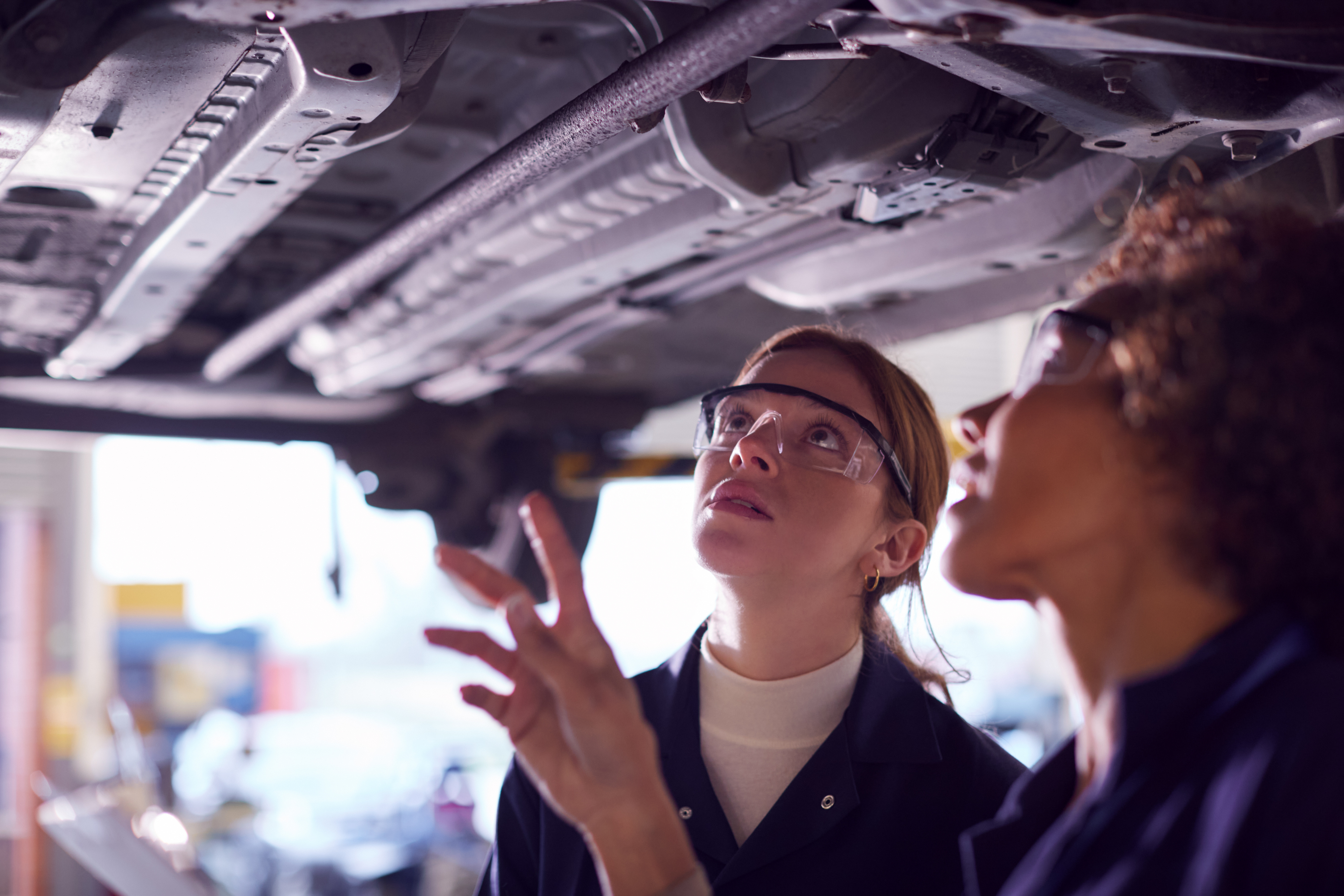
Fundamental Diagnostic, Repair, and Shop Procedures
In professional auto shops, technicians are expected to follow standard diagnostic and repair practices. Auto repair facilities also follow specific guidelines designed to protect the health and safety of workers, and to ensure customers receive correct and consistent service.
These practices are important because auto shops have to meet standards. Some of these standards are mandatory: Occupational Health and Safety Administration (OHSA) and Environmental Protection Agency (EPA) requirements will apply, no matter where you work.
Others are optional. For example, some shops and technicians hold certifications from organizations like the National Institute for Automotive Excellence (ASE). Similarly, some automotive mechanic schools and programs are accredited by the ASE Education Foundation or other industry organizations. This means that all students receive specialized training in the accreditor's advanced standards and practices.
Exact details of your first-year coursework will vary, depending on whether your school follows general shop practices and OHSA/EPA regulations, ASE guidelines, or another set of professional standards. In any case, you can expect to cover these types of concepts in your fundamental diagnostic, repair, and shop procedures classes:
- Essential safety and material handling practices
- Introductions to shop tools and equipment
- Measurement tools
- Diagnostic equipment and techniques
Some programs and concentration tracks specialize in particular vehicle makes. If yours does, you'll likely also learn about dealer-specific service standards in your first year.
Hands-On Skills Development
Auto mechanic schools balance classroom-based learning with field training in professional shop environments. Many programs introduce foundational knowledge and procedural basics in the classroom before moving to hands-on labs, where you can put your learning into practice.
As a first-year student, you can usually expect a combination of classroom-based and field-based learning. Courses sometimes include both classroom and lab components, which blend both environments in support of a broader educational goal.
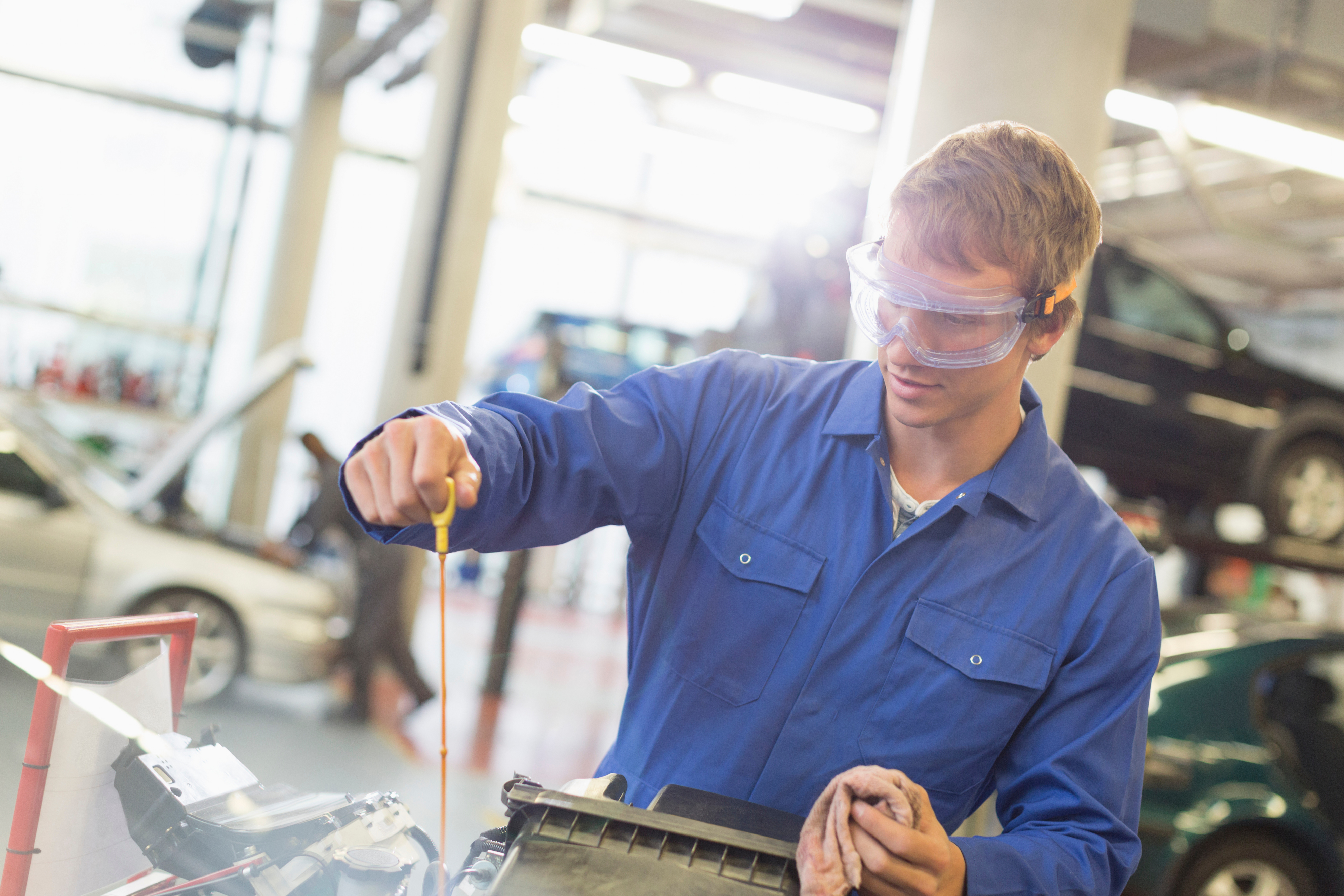
General Education Electives That Build Transferable Skills
Electives are another element of your first-year learning. Beyond your core auto tech courses, schools usually require students to complete general education electives in areas like:
- Business management
- Communications
- Computer science or digital technology
- Critical thinking
- Physical sciences
- Technical math
At first glance, these courses may not seem to connect with automotive training in any obvious way. In reality, they build valuable supplementary knowledge that maps directly onto both the soft and hard skills you'll use every day in your future career.
Here are a few examples:
- Business management courses teach the fundamentals of accounting, inventory management, and customer service. If you reach a senior position in a shop or start your own business, these skills will be a big help.
- Physical sciences courses cover important concepts from chemistry and physics. They'll help you understand how and why vehicle systems break down, how to repair and protect them, and how to keep yourself and others safe while doing it.
- Technical math courses explore measurements and unit conversions, geometry, and basic calculations. You'll use these skills when doing diagnostics, performing repairs, and analyzing specifications.
Depending on your program's length and structure, you may encounter only one or two of these electives in your first year. Longer programs and curriculums that lead to associate or bachelor's degrees usually contain more elective slots. Shorter programs tend to limit electives and focus strongly on core topics.
How Your First Year Prepares You For Future Learning
As you get ready for your first year in automotive mechanic school, it's also helpful to think about how the classes you're taking now will prepare you for your program's upper semesters. This will help your first year feel less abstract and more like the initial step into a bigger professional development picture.
Your first year will help you:
- Think like an auto repair pro when it comes to diagnostics, shop habits, and problem-solving
- Learn how to read technical documents and specifications for service procedures and repair instructions
- Prepare for specializations and certifications as you get ready to enter the workforce
Most of all, your first year in auto tech school will build a base for more advanced, specialized, and technical knowledge. If you think of your future career as a house, the first year is the foundation and the frame.
Connect With More Vocational School Resources For Auto Tech Students
Your first year in car mechanic school is just the beginning of an exciting journey. To help you plan your next steps, check out these additional resources covering:
- Valuable auto tech certifications and specialization pathways
- Futureproof career paths for automotive technicians
- Smart ways to get ready for auto tech school
If you're still considering your options or looking around for schools, you can also consult our guide on what to look for in an automotive tech program and explore the Old World Industries technician training hub.
Frequently Asked Questions
How much hands-on training happens in the first year?
First-year students typically split time between classroom instruction and hands-on lab work in shop environments. Many courses blend both formats within a single class rather than separating theory and practice entirely.
What electives do auto tech students take?
Common electives include business management, communications, computer science, critical thinking, physical sciences, and technical math. Shorter programs limit electives to focus on core technical coursework, while degree-track programs include more.
Do auto tech programs teach OSHA and EPA compliance?
Yes — OSHA and EPA requirements are mandatory standards covered in shop procedure coursework regardless of school or program type. Some programs add optional certification-track standards, such as those from ASE, on top of these baseline requirements.
How does the first year prepare students for later coursework?
First-year training builds the diagnostic thinking, technical reading skills, and procedural habits that upper-level coursework and certifications build on. It functions as the foundation for specialization tracks students pursue as they near program completion.